How Time and Climate Shape Pisco Logia’s Grapes

In the world of pisco, it all begins with the grapes. At PiscoLogía, our philosophy has always centered around respecting the integrity of the fruit, honoring the land, the climate, and the slow process by which nature brings grapes to perfect maturity. One of the quiet yet powerful advantages we have in Azpitia, where our vineyards stretch along the Pacific Coast, is time.
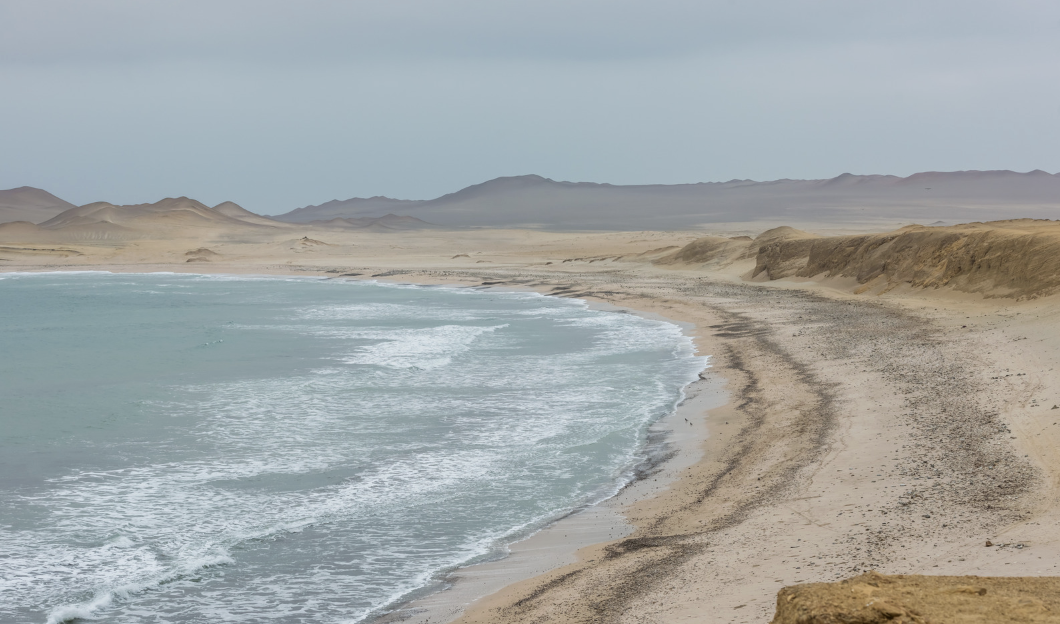
Azpitia, coast Peru, pisco grapes climate, terroir pisco

In this unique region, our grapes often experience a longer ripening period than is common in many other grape-growing zones of the world. While exact timelines can vary based on weather and grape variety, in Azpitia it’s not unusual for grapes to stay on the vine several weeks, sometimes even months, longer than they might in regions with more extreme or unpredictable climates.

Why Do Grapes Ripen More Slowly in Azpitia?

Azpitia’s terroir offers an ideal combination of factors that slow the grape’s maturation in the best possible way:

  • Mild, Stable Climate Year-Round
    Located in the coastal valley of the Mala River, Azpitia benefits from temperate, Mediterranean-like weather—warm days, cool nights, and no risk of frost. This allows for consistent, gradual ripening without pressure from sudden weather events.
  • Ocean Influence and Morning Mists
    The nearby Humboldt Current brings cool ocean breezes and misty mornings that moderate temperatures and delay sugar accumulation in the grapes, helping preserve acidity and aromatic freshness.
  • Extended Hang Time, Low Disease Pressure
    The dry conditions reduce the threat of mildew or rot, meaning grapes can remain on the vine longer without compromising quality—an advantage not all regions enjoy.

What Does Extended Ripening Mean for Pisco Grapes?

While there is little formal research directly linking longer ripening periods to better pisco, there is a clear connection between extended grape maturation and grape quality. That, in turn, affects the character of our distillate.

Here’s how:

  1. Higher Aromatic Complexity
    Slow ripening encourages the development of terpenes and esters, the aromatic compounds responsible for the signature floral and fruity notes in grapes like Italia, Torontel, and Quebranta. These compounds are preserved during careful distillation, especially in pisco puro and acholado styles.
  2. Balanced Sugar and Acidity
    The natural sugars in fully mature grapes contribute to the alcohol content in pisco, while acidity provides a sense of freshness and lift. A longer ripening period allows both to evolve in perfect proportion.
  3. Expression of Place
    Grapes that ripen slowly under consistent conditions are more likely to express the true essence of their terroir. In Azpitia, this means a pisco that carries the imprint of the sea, the sun, the valley winds—and time itself.


A Reflection, Not a Race

While many spirits can be made quickly or manipulated post-fermentation, pisco is different. As a pure, single-distillation spirit made without additives, oak aging, or dilution, the quality of the raw material is everything.

The fact that our grapes take their time is not just a climatic advantage—it’s a philosophical one. At PiscoLogía, we don’t rush the process. We let the grapes tell us when they’re ready.

From vine to glass, every bottle of PiscoLogía is a reflection of that time—patiently grown, carefully harvested, and authentically distilled.

What’s in a Name? The Venerability of Logía

When you see a Logía product on the shelf, you’re not just reading a brand — you’re seeing our philosophy in action. The word PiscoLogía is a combination of “pisco,” Peru’s beloved national spirit, and “-logía,” the Spanish equivalent of -logy, which means “the study of.” Together, PiscoLogía quite literally means “the study of pisco.”

But for us, it’s more than just a name. It reflects our deep respect for tradition, our commitment to education, and our obsession with quality. From vine to bottle, our pisco is the product of decades of craftsmanship, research, and hands-on experience. Everything we do — from harvesting grapes to teaching global certification courses — stems from our desire to share the story and soul of Peruvian pisco with the world.

A Name Rooted in Authenticity

PiscoLogía was born from a desire to bring a truly authentic, artisanal Peruvian pisco to international markets. The name reflects our roots in the rich agricultural traditions of Azpitia, Peru, and our commitment to transparency, quality, and education

It also sets us apart. In a competitive and sometimes crowded spirits landscape, having a name that carries a clear message and purpose is incredibly important. Recently, this distinctiveness became even more meaningful when a legal conversation emerged around the use of the name “Logia” in the alcoholic beverage category.

Why It Matters

Words carry weight, especially when they represent cultures, communities, and centuries of history. We chose PiscoLogía with intention: to honor the tradition of Peruvian pisco and invite others to study, taste, and appreciate it alongside us.

From vine to glass, our mission is to honor and preserve the heritage of pisco while helping others explore its nuances and beauty. Through our small-batch, handcrafted production and educational initiatives — like our free online Pisco Certification Course, now completed by thousands around the world — we invite others to join us in studying and appreciating this remarkable spirit.

Logia, PiscoLogia, Logia spirits

Finding Strength & Kinship in a Father’s Legacy

Our esteemed partner at PiscoLogia, Cynthia Vogel, captures the very soul of our latest journey at PiscoLogia. In her heartfelt reflection, she addresses the trademark issues confronting our pisco business, eloquently expressing the emotional and strategic dimensions of our fight. Cynthia’s words resonate deeply:

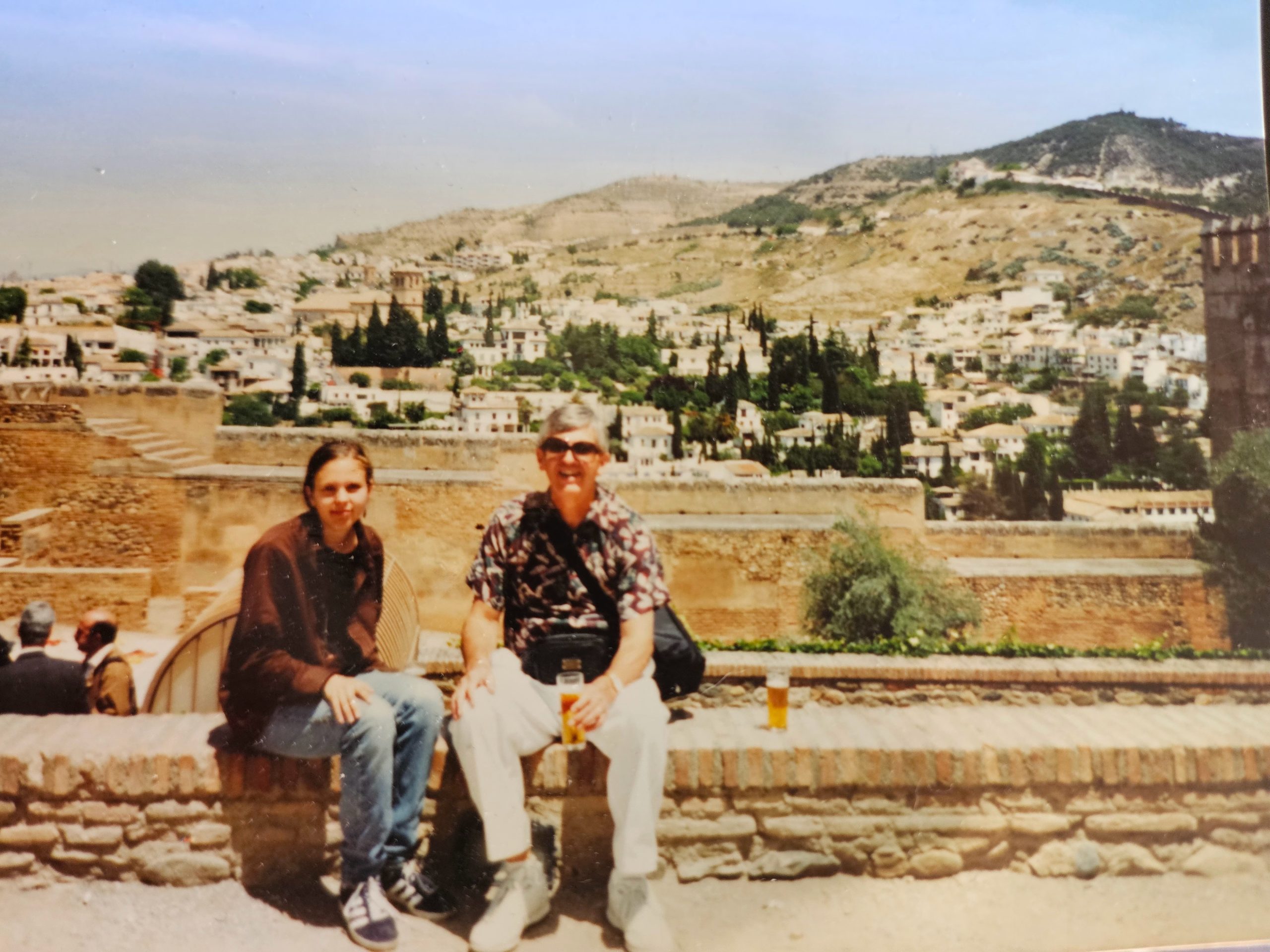
Cynthia and her father at the Alhambra in Granada, 1991

Digging through drawers of loose stacks of photos, looking to extract a select few of my dad seems fitting, I thought in preparation for this piece. Where are the photos of Kyoto and the cherry blossoms? Or of him grinning at Xochimilco with some Mariachis, about to step onto a trajinera? Some of my earliest memories involve photos of parties, stories of shenanigans from parties, a gag picture of me on display posed as a toddler with a can of beer. Beer was a frequent topic of conversation, and my dad provided for me and the rest of the family scattered across landscape through his work as a malting chemist turned executive in the Pacific NW. Beer was his life. I was fortunate to travel with him on business to Europe at sixteen, and to receive a real kimono as a gift from one of his many trips to Japan to do business with Suntory. It isn’t figurative to describe him as a guest appearance on Mad Men. At one of the dinners hosted by Suntory he attended in the mid 80’s, he and his VPs were accompanied by Geisha, courtesy of a tradition that recognizes women play valuable roles in forming strong ties. My dad admitted once in embarrassment that he had blacked out at a business function, though he rarely drank when doing business because of this type of risk. Yet among his feminine influences were also volks like the elderly neighborhood frau who made sauerkraut in a barrel in the back yard when he was a child in “Vancouver USA.”

His respect for the alchemical origins of beer making and monasticism is the link that I most resonate with now, an herbalist in practice, baking spelt bread from a Hildegard de Bingen recipe out of curiosity, or making a hops tincture or chamomile hydrosol.  When I made a five-gallon batch of wild rose mead from petals I wildcrafted by hand, I knew how proud he would be that I had taken up an ancient practice for myself. My dad took great pride in the brewing practices of our ancestors in Germany, as well as in introducing me to modern practices, industry and all its complexities.  He wrote and published an op ed in its defense during the early days of Mothers Against Drunk Driving, which had what he felt were echoes of Abolition he had recognized with concern.

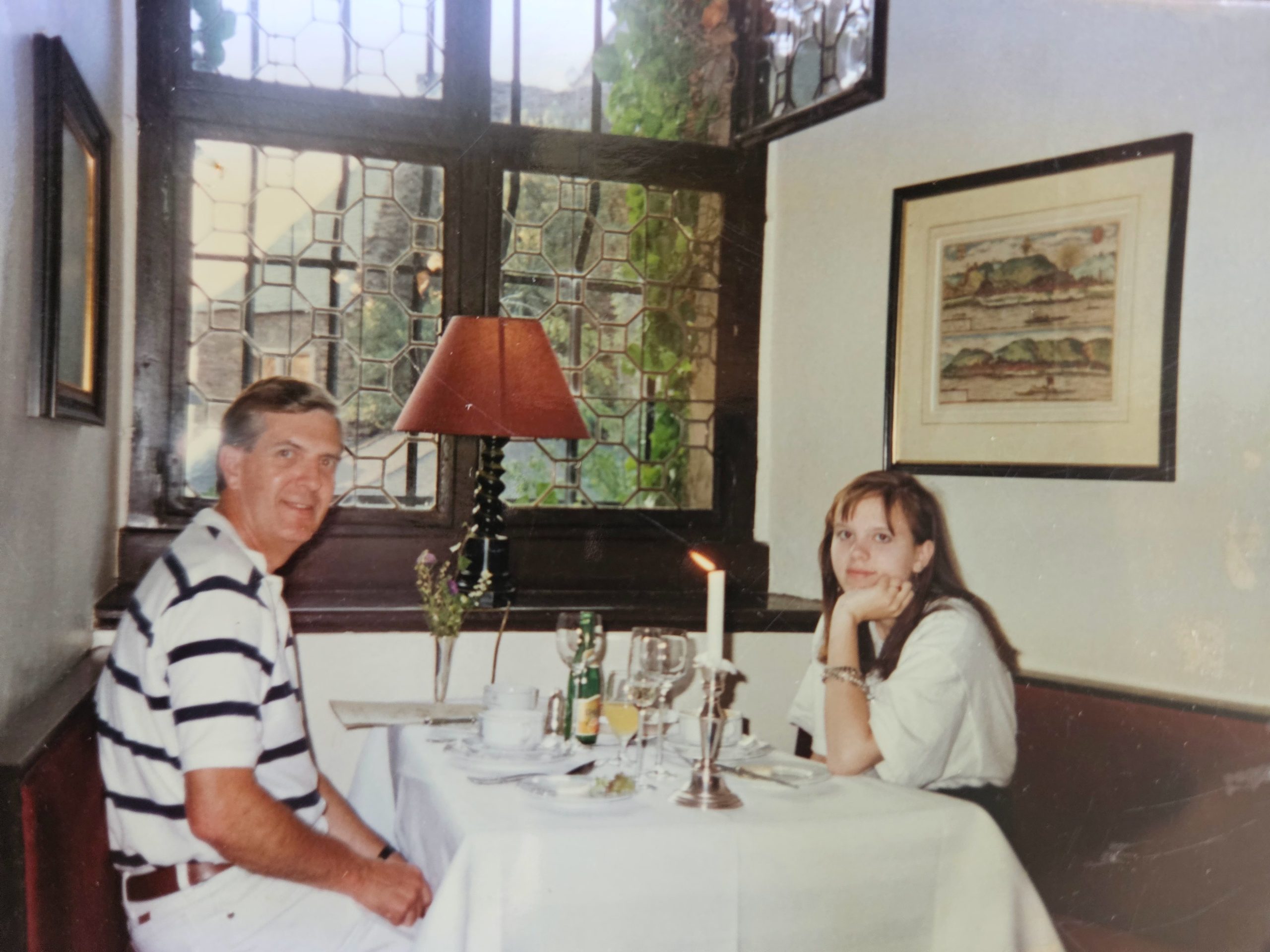
Having dinner at Reichenstein Castle on the Rhein River in 1988

I studiously walked in his shadow time and again as I talked to him about the growth of the microbrew industry during my early college days, and how his company would or would not adapt. I sensed his footsteps alongside me in Tenochtitlán where he too walked through history, and where I first met who would ultimately become my partner in Pisco Logia, a partnership that drew me in due to the established kinship formed by women in an endeavor to bring Pisco to a larger audience, and who celebrated my first ever bottling with me in his absence when I bottled my mead. Our small, internationally women-owned company is based in Eastern Washington where I ran the wilds as a child among my grandfather’s Kaiser car collection that surfaces now in the ghosts of my memory: a rusty, pastel rainbow row of cars that would look more at home in Havana, Cuba than Spokane, Washington today. The familial persistent memories are something that continue to be a marvelous and undeniable companion in my own relationship with the eau-de-vie.

As I wrap up a meeting with my partners to address the current pressures facing our small distiller in a growing market, I know my dad would be surprised, proud and perhaps aware that he underestimated me. I plan and strategize to best to sit across a legal table in the perceived men’s game of industry and finance, while my true heart sits across tablas y fronteras breaking bread with respect, gratitude and fortaleza for the legal challenges that lie ahead.


Cynthia Vogel is a licensed clinical social worker in private practice and part owner of Pisco Logia. The brand is currently facing potential litigation with Mezcal Amaras, a Mezcal brand that recently entered a distribution relationship with Beam Suntory. Her late father, Ronald Vogel was president of Great Western Malting Co., and a Past President of the Master Brewers Association of the Americas.


スーパーコピー ブランドコピー コピーブランド ロレックス スーパーコピー ロレックス コピー パテックフィリップ コピー パテックフィリップ スーパーコピー モンクレール スーパーコピー モンクレール コピー モンクレール ダウン コピー シュプリーム スーパーコピー シュプリーム コピー ウブロ スーパーコピー ウブロ コピー